Commercial and institutional sites across Greater Brisbane and surrounding areas. We handle the maintenance, drainage and upgrade work that keeps a building running.



A commercial plumber maintains, repairs and upgrades the water, drainage, gas and hot water systems a building runs on. Affinity has done that across Greater Brisbane and the surrounding area since 2012, working under QBCC Licence 125 8056 as a member of the Master Plumbers Association of Queensland.
Maintenance and compliance programs are the steady part of the work, on sites we already know. Drainage, vacuum excavation and project work fill the rest, mostly for universities, schools, hotels and body corporates. Almost none of it happens in an empty building. The pipework is usually straightforward. The window you get to touch it isn’t.
YEARS ON COMMERCIAL SITES
Affinity is family-run out of Brisbane. Collin Strydom manages it and is still on the tools, so the person quoting your job is usually the one who turns up to do it.
The team is kept small deliberately. Everyone sits down quarterly to decide what they want trained in next, and new starters run through refreshers before they work on site alone. It’s a slow way to build a business and the reason universities and government departments keep us on their approved lists.
Diagnosis, repair and replacement of water supply, sewer and stormwater drainage lines, including blocked drains that stop a floor or a whole building.
Gas, solar, heat pump, electric and hybrid, plus hot water safety plans. We check how a unit comes out before deciding how it goes in.
Box gutters, parapet flashings and rainwater harvesting by a roof plumber. One refurbishment ran to 110m of box gutter and 200m of parapet flashing.
Fire mains, hydrants and hose reels to Australian Standards and the BCA, including diesel-boosted hydrant upgrades. Sprinkler systems sit outside our scope.
Plumbing fit-outs for tenancies and refurbishments, plus scheduled plumbing maintenance across Brisbane that keeps a site off the callout list.
Scheduled backflow prevention device testing, thermostatic mixing valve servicing, and the isolation upgrades that make a future repair a section instead of a shutdown.
New builds and refurbishments, working to the hydraulic drawings and raising conflicts at set-out instead of at commissioning.
Mains water, stormwater and service location, including a 700m PE main and live tap-in under water authority approval.
Schools, early learning centres and universities, including nine solar hot water systems installed over one university summer break.
Temperature compliance, hot water reliability and work sequenced so a ward or wing stays in use.
Trade waste, food production and workshop plumbing, including stormwater upgrades set to minimum falls under a truck roadway.
Corporate Apartment complexes and shared services, with work staged so residents keep water while repairs run.
Isolation first, then repair. Where a floor has no isolation valve, we add one while the ceiling is already open.
Jetting or eel depending on the line, with drain cleaning done properly instead of pushed further down the system.
Usually a kitchen running past its pump-out schedule, which means the interval needs revisiting more than the trap does.
If the same unit keeps failing, water chemistry is a more likely cause than the age of the unit.
Isolation, leak detection and certification by a licensed gas fitter before anything is turned back on.
Overflowing box gutters put water inside the building, where capacity and outlet sizing matter more than sealant.
A blocked sewer gets contained and cleared first, then reported with the cause identified and recorded.
Compliance defects found at inspection, repaired to standard so the building isn't carrying an open item.
The most expensive drain excavation is the one that finds a service nobody drew. Locating first avoids it.
Scope taken over the phone, urgency assessed against what else is on, and an attendance time confirmed before you hang up.
Assessment on site, with the cause identified before a quote is written. Crews that only work from drawings stall when the drawing is wrong.
Where regulations allow more than one compliant fix, you get the choice in writing. Nothing proceeds until it's approved.
Job completed, then the invoice and its Job Safety Analysis issued together, carrying your job, request and purchase order numbers.
“Relined 40 metres of common-property sewer without lifting a single tile. Levy-friendly price too.”
“Burst main at 8pm, road open by 6am. That phone call is why they keep our emergency work.”
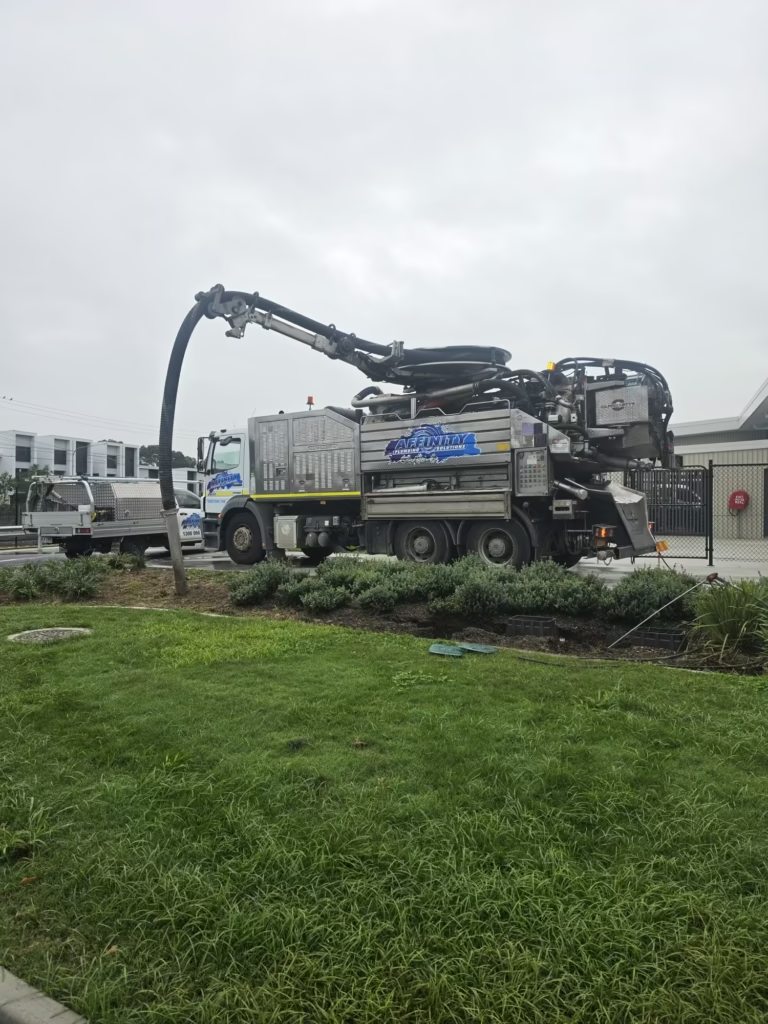
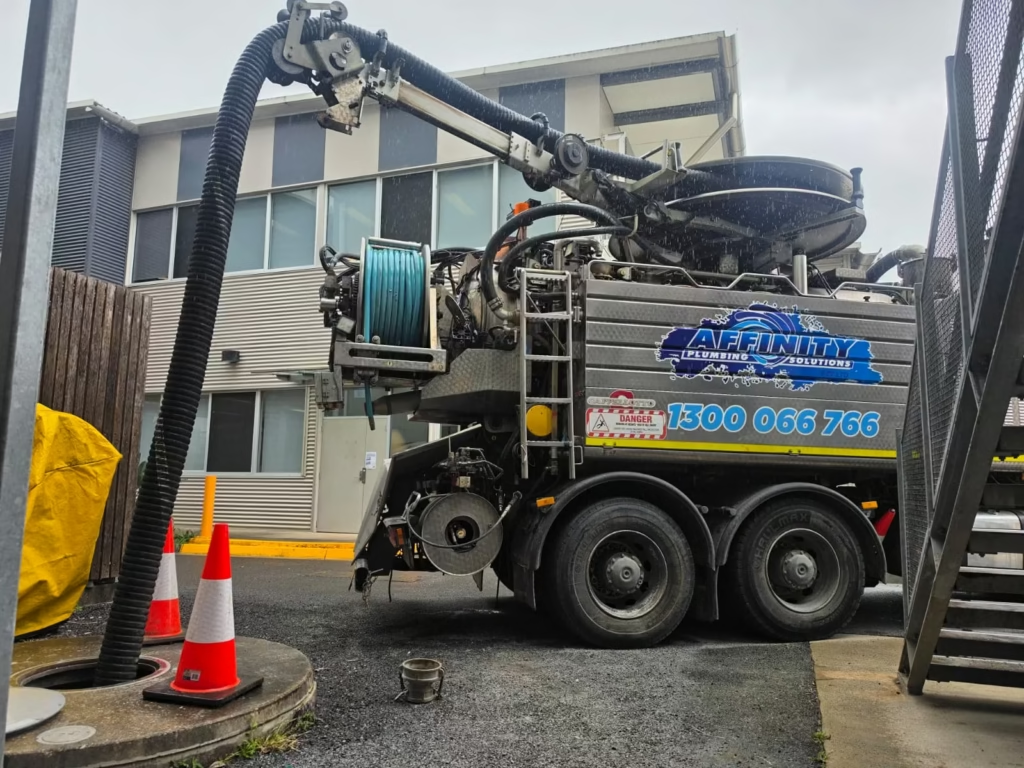
Vacuum excavation, also called hydro excavation, uses pressurised water or air to break up soil and a vacuum to lift it, exposing buried services without a blade going near them. It's used wherever a strike would be expensive or dangerous: live water and gas mains, electrical and comms, and any site where the as-built drawings can't be trusted.
Response time gets confirmed on the call itself. The scope is taken, urgency is weighed against what's already booked, and you're given an attendance window before the call ends. For sites on a maintenance agreement, a drainage plumber or maintenance crew is allocated ahead of general enquiries.
Coverage runs across Greater Brisbane and the surrounding areas, including the northside and southside industrial corridors, Moreton Bay, Logan and Ipswich. Sites outside that range are taken case by case, usually where there's existing work nearby or a project of enough scale to justify the travel.
Testable backflow prevention devices are required to be tested annually by a licensed plumber holding the relevant endorsement, and the results recorded with the water authority. In Brisbane that's Queensland Urban Utilities. Thermostatic mixing valves run on their own servicing cycle and are usually handled in the same visit.
Yes. Every invoice is issued with a Job Safety Analysis and carries the job number, request number and purchase order it relates to. Where CCTV has been run, the footage and the pipework map go to you as well, so the record sits with the building rather than the contractor.
That's the standard arrangement. Affinity works to purchase order and request number systems, holds current QBCC licensing and public liability cover, and can supply insurances and ticket records for a prequalification pack. Schools, universities and government departments are already run this way.
Not usually. The work is commercial and institutional: schools, universities, aged care, hotels, apartment complexes and industrial sites. Occupied buildings and compliance obligations are what the team is set up around, and a domestic call-out plumber is a better fit for a house.
You get told before it's touched. On older buildings, opening a ceiling or a trench regularly turns up a service nobody drew or a section of pipe past its life. The additional work is priced separately and doesn't proceed until it's approved, which is the same rule as the original scope.
Licences, insurances, plant list and recent case studies — everything procurement needs, in one PDF.
Request a free site assessment. We’ll identify exactly what your drainage needs, design a program that fits your operations, and give you transparent pricing.
Unit 4, 22 Kremzow Road, Brendale QLD 4500