




A resin-soaked liner is pulled or inverted into the failed pipe, pressed against the old wall, and cured hard. You get a new pipe formed inside the old one. Most drains qualify. A pipe that has collapsed or pulled apart at a joint has nothing left to line against, so that section gets dug.
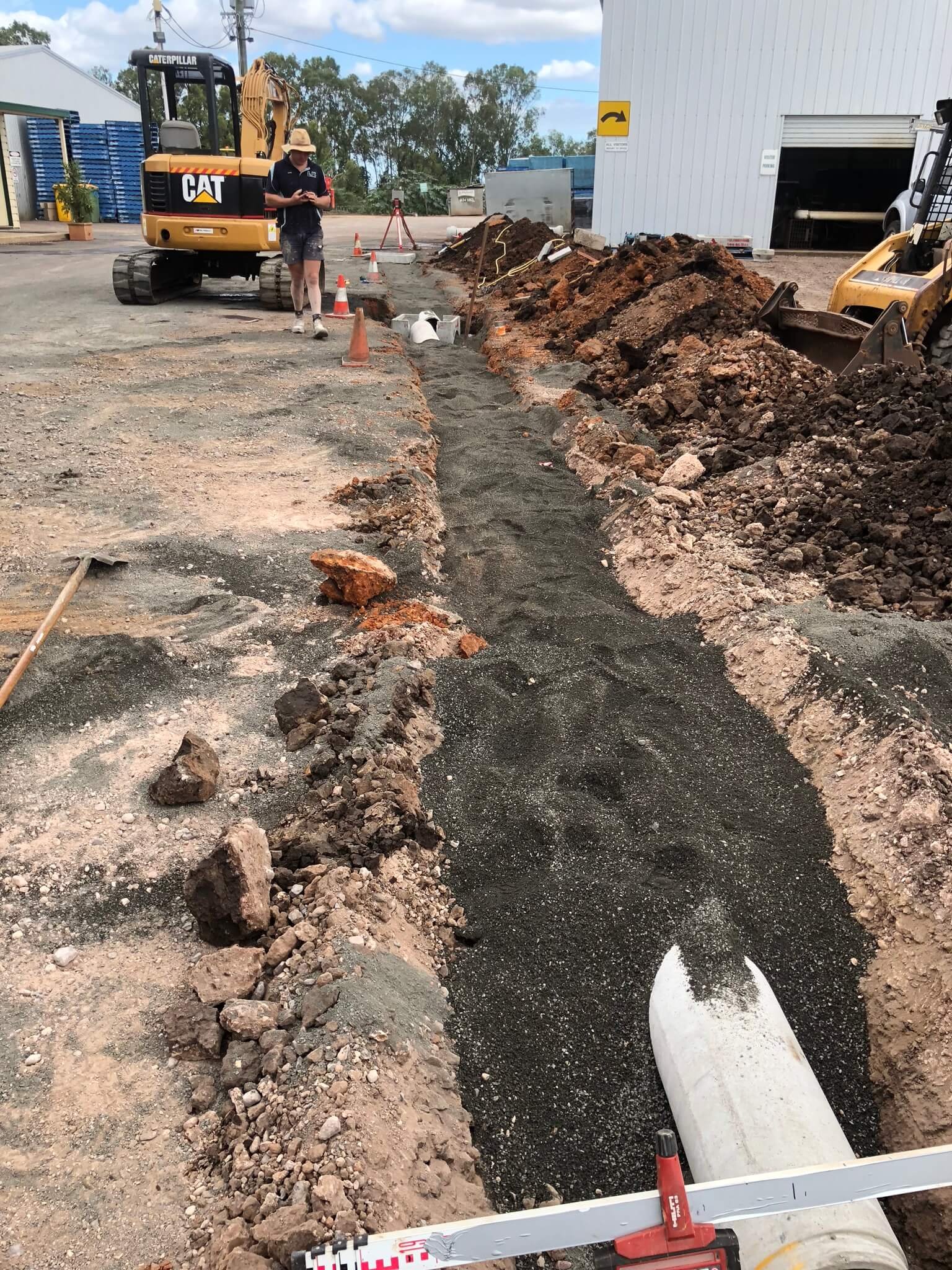
Roots and bends don’t disqualify a line on their own. Roots get cut and jetted out first, and a liner will take a couple of bends without trouble. The real argument for excavation is a sag in the line. Relining follows the grade of the pipe it’s lining, so a section that pools water will still pool water afterwards.
1300 066 766
No excavation means no saw cutting the slab and no concrete reinstatement bill afterwards. The liner seals every joint it passes, which is where tree roots get in, so the roots that keep coming back lose their entry point. A correctly cured liner is engineered for fifty years or more. Flow usually improves, because a smooth resin wall carries water better than scaled, root-scarred clay of the same diameter, even after the small loss of internal size. The part facilities managers care about most is downtime. A crew can be in and out while the building keeps trading.
One thing decides whether that fifty years is real. On commercial pipe relining the liner has to run continuously through the junctions. Some contractors stop and restart at every lateral, which leaves the old shoulders exposed to flow and debris until they curl and water tracks in behind. We’ve seen body corporates chasing the original contractor eight years later for a strip-out costing several times the continuous quote they turned down. Ask what the written contract says, not what you were told on site. Ask for the liner manufacturer’s installation spec and the AS/NZS 3500 reference too.
1300 066 766
CCTV run of the full line, then jetting to strip roots, scale and grease so the liner sits against a clean wall.
We measure the run, cut the liner to length, and saturate it with resin on site.
The liner is inverted through, inflated against the old pipe, and cured hard in one continuous length through the junctions.
Branches are cut back open at each wye, then a final camera run and the pipework map come to you.
Underground failures on a working site are a scheduling problem before they’re a plumbing one. Found early on camera, relining is planned capital works with a known cost. Talk to Affinity about pipe relining in Brisbane North, Ipswich and Logan.
Unit 4, 22 Kremzow Road, Brendale QLD 4500